

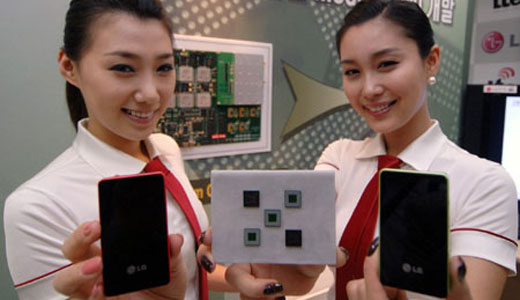
LG, one of the world’s leading mobile phone manufacturers, is currently testing a new mobile phone chip that supports download speeds of up to 100 Mbps. The chip is based on the WCDMA 3G technology and the 3GPP Long Term Evolutionary (LTE) specifications, and is being branded as ‘4G’ technology. LG claims that network providers would be better off adopting its ‘4G’ technology rather than WiMax because it’s cheaper.
The chip is 13mm x 13mm in size and was recently tested on a Windows Mobile device at an LG research lab in Korea. While the chip only managed a top download speed of 60Mb/s and an upload speed of 20Mb/s during testing, both speeds represent a vast improvement over what is currently possible using today’s HSDPA technology. This means that users would be able to download and upload data much faster than ever before.
According to LG, its ‘4G’ technology is more cost-effective than WiMax because it uses existing infrastructure and equipment, which means that network providers don’t have to spend as much money on building new infrastructure to support the technology. This is good news for network providers, as they would be able to offer faster data speeds to their customers without incurring significant costs.
LG’s ‘4G’ technology has the potential to revolutionize the mobile phone industry, as it would allow users to download and upload data much faster than ever before. This could lead to a significant increase in mobile phone usage, as users would be able to download and stream content more easily. It could also lead to the development of new mobile phone applications and services that require faster data speeds.
In conclusion, LG’s ‘4G’ technology is a significant advancement in mobile phone technology. Its ability to support download speeds of up to 100 Mbps represents a vast improvement over what is currently possible using today’s HSDPA technology. If network providers adopt this technology, they would be able to offer faster data speeds to their customers without incurring significant costs. This could lead to a significant increase in mobile phone usage, the development of new mobile phone applications and services, and a revolution in the mobile phone industry.


